

New Delhi [India], June 4 (ANI): The Centre on Thursday announced a Rs 10,000 crore Aviation Turbine Fuel (ATF) price stabilisation mechanism for Indian airlines to ensure stability in air services, and shield passengers from the impact of extraordinary volatility in the global fuel prices amid the continuing crisis in West Asia.
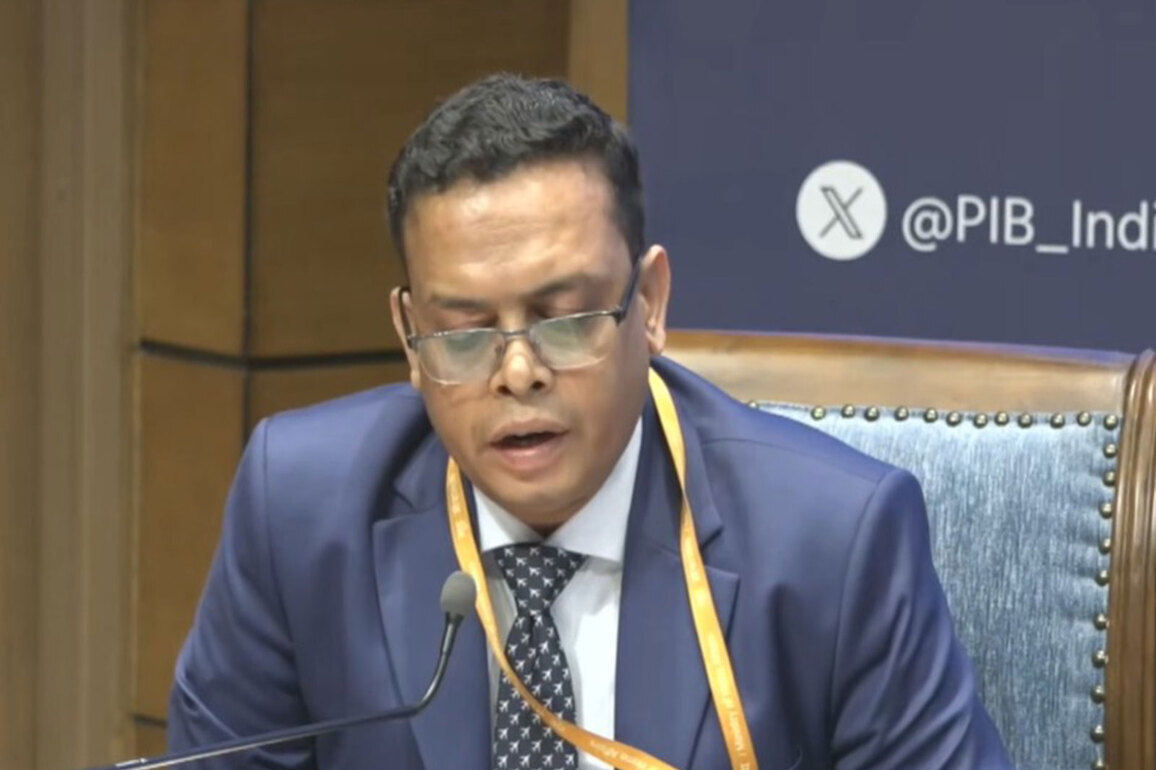
Addressing the inter-ministerial media briefing, Rohit Raj, Director in the Ministry of Civil Aviation, said the Union Cabinet had approved 'a one-time budgetary support mechanism of rupees up to 10,000 crores to provide ATF price stabilisation support to scheduled Indian carriers.'
Raj said the decision has been taken in a 'larger public interest to protect air connectivity, ensure stability in air services, and shield passengers from the impact of extraordinary volatility in the global fuel prices arising out of the ongoing crisis.'
Under the approved mechanism, the government will provide an interest-free advance to oil marketing companies (OMCs), allowing them to supply aviation fuel to participating Indian airlines at a pre-determined stable price. 'Whenever international ATF prices rise above the benchmark level, that is the fixed price under this arrangement, the corpus will compensate OMCs for the difference,' Raj explained.
At the same time, he emphasised that the support package was not a permanent subsidy. 'Importantly, when the fuel price moderates, the differential amount will be recovered from oil marketing companies and returned to the Consolidated Fund of India through a transparent true-up mechanism,' he said.
'This arrangement is intended not as a subsidy, but a temporary stabilisation measure to smooth the impact of exceptional fuel price volatility while ensuring full accountability, monitoring, and recovery of funds.'
According to the Civil Aviation Ministry, aviation fuel remains one of the largest cost components for airlines, and recent developments have sharply increased operating expenses. 'ATF constitutes a major component of airline operating cost, and the sharp increase in the international fuel prices, coupled with longer flight paths for Indian carriers on account of closure of Pakistan airspace, has placed significant pressure on airline operations,' Raj said.
The government expects the measure to help airlines maintain operational stability and avoid passing on the full burden of higher fuel costs to passengers. 'For passengers, the most important benefit of this decision is that it will help to moderate sudden increases in the airfare that often result from sharp spikes in fuel prices,' Raj said.
'By reducing the exposure of airlines to extreme fuel price fluctuations, the government aims to minimise the pass-through of such costs to travellers and provide a greater fare stability.'
The official added that the scheme would support connectivity across the country, including services to regional and remote destinations. 'This will particularly benefit families, students, business travellers, tourists, and citizens who depend on air transport for mobility and economic opportunities,' he said.
He further noted that 'continued connectivity is essential for regional development, tourism, trade, healthcare access, education, and investment,' adding that the initiative would support the government's vision of 'inclusive growth and balanced regional development.'
The briefing then turned to the evolving situation in West Asia, where India continues to monitor developments closely.
MEA's Additional Secretary (Gulf) Aseem R Mahajan said the government's primary focus remained the welfare and safety of Indian nationals in the region. 'Ministry of External Affairs continues to closely monitor the developments in the Gulf and West Asia region. Our efforts are focused on ensuring the safety and welfare of the Indian community in the region,' Mahajan said.
He said the Centre was coordinating continuously with state governments and Union Territories. 'We are in constant touch with the state governments and Union territories for sharing information and to coordinate our efforts,' he said.
According to Mahajan, Indian diplomatic missions throughout theWest Asia have been operating on an emergency footing. 'Our embassies and consulates across the region are on alert and are proactively assisting our community. They are operating round-the-clock helplines to provide timely assistance to Indian nationals,' he said.
'Our missions are actively engaged with the resident Indian community. They are regularly interacting with the Indian community associations, organisations, professional groups, and Indian companies to address their concerns,' Mahajan added.
Providing an update on transportation links, Mahajan said the overall flight situation had improved significantly in recent days. 'The overall flight situation continues to improve with additional flights operating from the region to various destinations in India,' he said.
He noted that airspace in the United Arab Emirates, Kuwait and Bahrain remains open, while flights continue to operate from Saudi Arabia and Oman. Qatar's airspace is partially open, with services being operated by Air India, Air India Express, IndiGo and Qatar Airways.
On Iran, Mahajan reiterated the government's advisory. 'Iran's airspace is partially open; we have advised Indian nationals to avoid travelling to Iran and urge those already there to leave with our embassy's support,' he said.
'So far, our embassy in Tehran has facilitated the movement of 2,557 Indian nationals out of Iran through land border routes.'
Mahajan also provided details on the attack at Kuwait International Airport. 'Yesterday, in an attack on the Kuwait International Airport, an Indian national unfortunately lost his life. We express our deepest condolences to the family of the deceased,' he said.
He said the Indian mission in Kuwait was assisting the family and coordinating with local authorities.'His mortal remains are expected to arrive in India tomorrow,' Mahajan added.
He further revealed that '13 Indian nationals have also been injured in the attack and are currently undergoing treatment at various hospitals in Kuwait.'
'Our mission is extending all assistance to the injured and is in close touch with the local authorities,' he said.
Addressing maritime concerns, Opesh Kumar Sharma, Director of the Ministry of Ports, Shipping and Waterways, said India's seafaring community in the region remained safe.
'All Indian seafarers in the region are safe and no incident involving Indian seafarer on any Indian flag vessel or foreign flag vessel has been reported in past 72 hours,' Sharma said.
He noted that the Directorate General of Shipping's emergency control room had remained active throughout the crisis. 'The Directorate General Shipping control room has handled more than 11,600 calls and more than 25,800 emails since activation,' he said.
'In the last 72 hours, a total of 444 calls and 1,034 emails have been received from seafarers, their families, and maritime stakeholders.'
Sharma said the ministry had 'facilitated the safe repatriation of more than 3,474 Indian seafarers so far, including 28 in the last 72 hours from various locations across the Gulf region.'
He also reassured stakeholders that maritime trade remained unaffected. 'Port operations across India remain normal with no congestion reported.' (ANI)